



How Does a Coil Winding Machine Work?
A coil winding machine is an essential piece of equipment used to manufacture transformers, inductors, motors, relays, solenoids, and many other electromagnetic components. Instead of winding wire manually, the machine controls the movement of the wire and bobbin with high precision, ensuring consistent coil quality and improving production efficiency.
Modern coil winding machines range from simple semi-automatic models to fully automated systems capable of handling complex winding patterns, multiple wire strands, and high-speed production. As electronic products continue to become smaller and more powerful, precision winding has become increasingly important for maintaining the performance and reliability of magnetic components.
Basic Working Principle
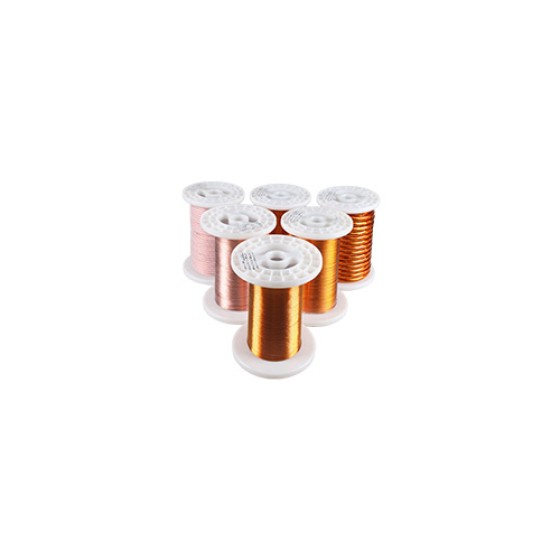
The working principle of a coil winding machine is relatively straightforward. Magnet wire is fed from a wire spool through a tension control system and a wire guide. The machine rotates the bobbin or magnetic core while accurately guiding the wire into position.
Every rotation places one turn of wire onto the bobbin. By controlling the rotational speed, wire tension, and guide movement, the machine creates a winding pattern that matches the required transformer or inductor design.
Computer-controlled winding machines can store multiple winding programs, allowing different products to be manufactured without extensive mechanical adjustments.
Main Components of a Coil Winding Machine
Although machine designs vary, most coil winding machines include several common components.
Wire Payoff System
The wire payoff system supplies magnet wire from the spool while maintaining smooth and continuous feeding.
A stable wire supply helps prevent tangles, sudden tension changes, and wire damage during winding.
Tension Control System
Wire tension directly affects winding quality.
If the tension is too low, the wire may become loose or overlap incorrectly. If it is too high, the wire insulation may be damaged or the wire may break.
Modern machines use electronic or servo-controlled tension systems to maintain consistent wire tension throughout the winding process.
Rotating Spindle
The spindle holds the bobbin, core, or winding fixture and rotates it at the programmed speed.
High-quality spindle control ensures accurate turn counting and stable winding even at high production speeds.
Wire Guide Mechanism
The wire guide moves back and forth while the spindle rotates.
Its function is to distribute the wire evenly across the bobbin and create the required winding pattern.
Servo-controlled wire guides provide precise positioning for complex winding designs.
Control System
Modern winding machines are usually controlled by a PLC or CNC system.
Operators can program parameters such as:
- Number of turns
- Rotation speed
- Wire guide position
- Winding direction
- Layer changes
- Start and stop positions
This allows the same machine to produce a wide variety of coil designs.
The Coil Winding Process
Although different products require different winding methods, the general production process follows several basic steps.
Step 1: Install the Bobbin or Core
The operator places the transformer bobbin, inductor core, or winding fixture onto the machine spindle.
The workpiece is secured to prevent movement during winding.
Step 2: Load the Magnet Wire
The magnet wire is threaded through the tension system and wire guide before being attached to the bobbin.
Proper threading is essential for stable winding.
Step 3: Set the Winding Program
The operator enters or selects the required winding parameters, including:
- Number of turns
- Wire diameter
- Winding speed
- Layer arrangement
- Direction of rotation
For automated production, these programs are stored in the machine's memory.
Step 4: Automatic Winding
The spindle begins rotating while the wire guide moves according to the programmed path.
The machine continuously monitors the winding process to ensure accurate positioning and consistent wire tension.
Step 5: Finishing the Coil
After the required number of turns is completed, the machine stops automatically.
Depending on the production line, additional operations such as taping, soldering, lead forming, or wire cutting may be completed automatically before the finished coil is removed.
Types of Coil Winding Machines
Different products require different winding technologies.
Common types include:
- Single-spindle winding machines
- Multi-spindle winding machines
- Automatic transformer winding machines
- Toroidal coil winding machines
- Air-core coil winding machines
- CNC coil winding machines
Each type is designed for specific production requirements and coil structures.
Applications of Coil Winding Machines
Coil winding machines are used across many industries.
Common applications include:
- High frequency transformers
- Low frequency transformers
- Power inductors
- Common mode chokes
- Electric motors
- Relays
- Solenoid coils
- Current transformers
- Wireless charging coils
They are widely used in consumer electronics, industrial automation, renewable energy systems, automotive electronics, and communication equipment.
Advantages of Automatic Coil Winding Machines
Compared with manual winding, automatic machines offer several significant benefits.
Higher Production Efficiency
Automated winding greatly increases output and reduces labor requirements.
Better Winding Accuracy
Servo-controlled positioning ensures accurate turn counts and consistent winding quality.
Improved Product Consistency
Every coil is produced using the same programmed parameters, reducing variation between products.
Lower Manufacturing Costs
Higher efficiency and reduced material waste help lower production costs over time.
Support for Complex Coil Designs
Modern machines can handle multilayer winding, segmented winding, bifilar winding, and other specialized coil structures that would be difficult to produce manually.
Choosing the Right Coil Winding Machine
Selecting a suitable winding machine depends on several factors, including:
- Product type
- Wire diameter
- Coil dimensions
- Production volume
- Required winding accuracy
- Automation level
Manufacturers producing high-volume transformer or inductor products often invest in fully automated winding systems, while smaller production facilities may choose flexible CNC winding machines for greater versatility.
A coil winding machine is one of the most important pieces of equipment in magnetic component manufacturing. By accurately controlling wire tension, spindle rotation, and wire positioning, it produces consistent, high-quality coils for transformers, inductors, motors, and many other electrical products.
As automation and precision manufacturing continue to advance, modern coil winding machines are becoming faster, smarter, and more flexible, helping manufacturers improve product quality while meeting the growing demand for high-performance electronic components.