


What Is a Toroidal Ferrite Core Used For?
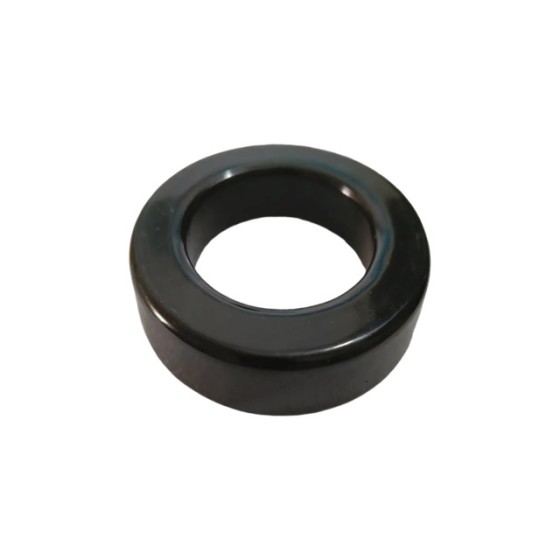
A toroidal ferrite core is a ring-shaped magnetic component widely used in transformers, inductors, and electromagnetic interference (EMI) filtering applications. Unlike traditional E-shaped or U-shaped cores, a toroidal core has a continuous circular magnetic path, which provides excellent magnetic efficiency and reduces unwanted leakage flux.
Because of its unique structure, toroidal ferrite cores are commonly found in applications where low noise, compact design, and high efficiency are important.
Understanding the Structure of a Toroidal Ferrite Core
A toroidal ferrite core has a simple donut-shaped structure made from ferrite magnetic material.
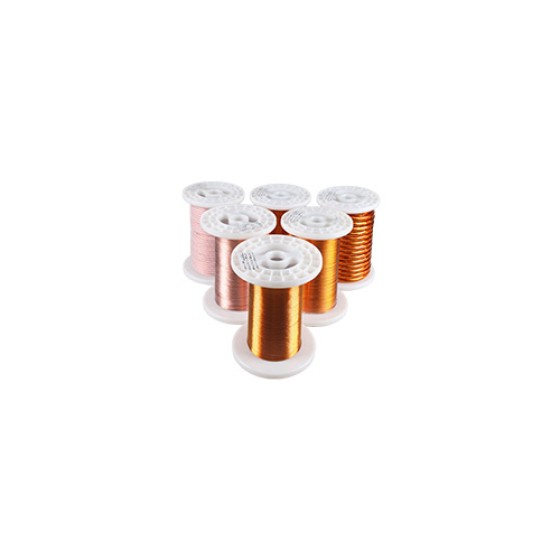
The winding wire is passed through the center opening and wrapped around the outside of the core. When current flows through the winding, the generated magnetic field remains mainly inside the closed magnetic path.
This structure provides several advantages:
- Low magnetic leakage
- Reduced electromagnetic interference
- High magnetic efficiency
- Compact size
Ferrite materials are commonly selected for toroidal cores because they provide good performance at high frequencies.
How Does a Toroidal Ferrite Core Work?
The operating principle of a toroidal ferrite core is based on electromagnetic induction.
When electrical current flows through the coil winding, it creates a magnetic field around the conductor. The ferrite core concentrates this magnetic field and guides the magnetic flux through the circular path.
Because the magnetic path is closed, fewer magnetic fields escape into the surrounding environment compared with open core designs.
This makes toroidal cores suitable for applications where electromagnetic noise needs to be minimized.
Common Applications of Toroidal Ferrite Cores
EMI Suppression and Noise Filtering
One of the most common uses of toroidal ferrite cores is electromagnetic interference suppression.
Electronic devices generate unwanted high-frequency noise during operation. A toroidal ferrite core can be used to create common mode chokes or noise filters that block unwanted interference while allowing normal signals or power to pass.
Applications include:
- Power cables
- Communication equipment
- Industrial control systems
- Consumer electronics
Toroidal Inductors
Toroidal ferrite cores are widely used in inductors because their closed magnetic path improves inductance performance.
Advantages include:
- Higher inductance efficiency
- Lower magnetic leakage
- Reduced electromagnetic radiation
They are commonly used in:
- Power supplies
- DC-DC converters
- Filtering circuits
- Energy storage applications
Power Transformers
Toroidal ferrite cores can also be used in compact transformer designs, especially where low noise and high efficiency are required.
Applications include:
- Audio transformers
- Medical equipment
- Industrial power systems
- High frequency converters
The circular structure helps reduce leakage flux and improves transformer performance.
Current Sensors and Measurement Devices
Toroidal cores are often used in current transformers and sensing applications.
The conductor passing through the center creates a magnetic field that can be measured through the core and winding structure.
They are used in:
- Power monitoring systems
- Energy measurement equipment
- Protection circuits
Advantages of Toroidal Ferrite Cores
Low Magnetic Leakage
The closed magnetic path keeps most of the magnetic flux inside the core, reducing interference with nearby components.
This is especially useful in sensitive electronic systems.
High Efficiency
The efficient magnetic path helps reduce energy loss and improves component performance.
Compact Design
Toroidal cores provide good magnetic performance while maintaining a small physical size.
Low Noise Operation
Reduced leakage flux helps minimize electromagnetic noise, making toroidal cores suitable for audio and precision electronic applications.
Toroidal Ferrite Core Materials
Different ferrite materials are selected depending on the application.
MnZn Ferrite
MnZn ferrite is commonly used for power applications because it provides:
- High permeability
- Good magnetic flux performance
- Suitable operation at lower and medium frequencies
Applications include:
- Power inductors
- Transformers
- Common mode chokes
NiZn Ferrite
NiZn ferrite provides higher electrical resistivity and performs well at higher frequencies.
Applications include:
- EMI filters
- RF components
- High frequency signal applications
Toroidal Ferrite Core vs EE Ferrite Core
Toroidal and EE cores are both widely used magnetic components, but they have different characteristics.
| Feature | Toroidal Ferrite Core | EE Ferrite Core |
|---|---|---|
| Shape | Ring-shaped | E-shaped |
| Magnetic Leakage | Very low | Higher |
| Winding Process | More difficult | Easier |
| EMI Performance | Excellent | Good |
| Common Uses | Filters, inductors, low-noise applications | Transformers, power supplies |
EE cores are usually easier to manufacture, while toroidal cores provide better magnetic containment.
How to Select a Toroidal Ferrite Core?
Selecting the right toroidal ferrite core depends on several factors:
Operating Frequency
The ferrite material should match the working frequency range.
Power Requirements
The core size must support the required current and prevent magnetic saturation.
Application Type
Different designs require different characteristics:
- EMI filtering requires high impedance performance
- Power inductors require energy storage capability
- Transformers require efficient magnetic coupling
Temperature Conditions
The core material should maintain stable performance under the expected operating temperature.
Toroidal ferrite cores are important magnetic components used in many modern electronic systems. Their closed magnetic structure provides excellent efficiency, low leakage flux, and strong EMI performance, making them ideal for inductors, transformers, filters, and noise suppression applications.
With the continued development of high efficiency power electronics, renewable energy systems, and compact electronic devices, toroidal ferrite cores remain a valuable solution for improving magnetic component performance.