


How to Choose the Right Ferrite Core?
Ferrite cores are essential magnetic components used in transformers, inductors, filters, and power electronic systems. The correct ferrite core selection has a direct impact on efficiency, temperature rise, energy loss, and overall component reliability.
Although ferrite cores may look similar in appearance, different materials and shapes are designed for specific applications. Choosing an unsuitable ferrite core can result in higher losses, overheating, or reduced performance.
For engineers designing transformers and inductors, several key factors should be considered when selecting a ferrite core.
Consider the Operating Frequency
Operating frequency is one of the most important factors when selecting a ferrite core.
Different ferrite materials have different performance characteristics at various frequency ranges. A core that performs well at lower frequencies may not be suitable for high frequency applications.
For example:
- High frequency transformers often operate from tens of kilohertz to hundreds of kilohertz.
- RF applications may require operation at several megahertz.
Ferrite cores are preferred in high frequency applications because they have low core loss and high electrical resistance, which helps reduce eddy current losses.
Select the Appropriate Ferrite Material
Ferrite materials are usually classified according to their chemical composition and magnetic properties.
MnZn Ferrite
MnZn ferrite is one of the most commonly used ferrite materials for power applications.
It provides:
- High magnetic permeability
- Good saturation flux density
- Strong energy transfer capability
Typical applications include:
- High frequency transformers
- Switching power supplies
- Power inductors
- Common mode chokes
NiZn Ferrite
NiZn ferrite has higher electrical resistivity and performs better at higher frequencies.
It is commonly used for:
- RF transformers
- Signal inductors
- EMI suppression components
- High frequency applications
The choice between MnZn and NiZn ferrite depends mainly on frequency range, power requirements, and circuit design.
Choose the Correct Core Shape
Ferrite cores are available in many different shapes, and each design has specific advantages.
EE Core
EE cores are widely used in electronic transformers because they provide:
- Simple structure
- Easy winding process
- Cost-effective production
They are commonly used in switching power supplies and adapters.
EF and EFD Core
EF and EFD cores are designed for compact electronic devices where space is limited.
Applications include:
- Mobile chargers
- Slim power supplies
- Consumer electronics
PQ Core
PQ cores are often used in higher power applications because they provide:
- High power density
- Efficient winding space
- Good thermal performance
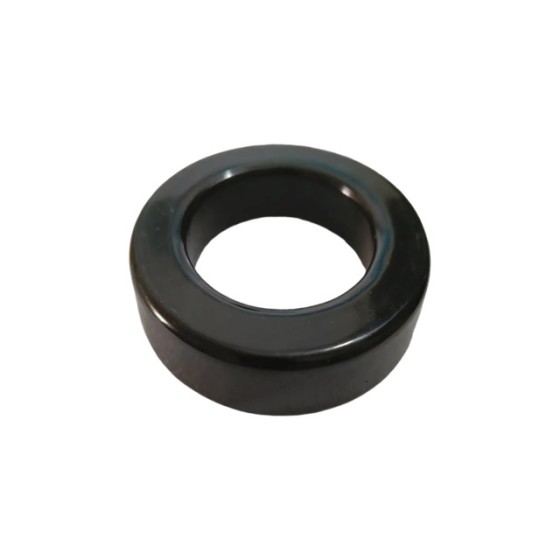
Toroidal Core
Toroidal ferrite cores provide a closed magnetic path, reducing magnetic leakage and electromagnetic interference.
They are commonly used in:
- Filters
- Inductors
- Noise suppression applications
Consider Power Requirements
The required power level determines the appropriate ferrite core size.
A smaller core may not handle the required magnetic flux, causing saturation and overheating.
Important parameters include:
- Output power
- Current level
- Energy storage requirement
- Duty cycle
For transformers, engineers need to ensure that the core can handle the required magnetic flux density without entering saturation.
For inductors, the core must provide enough energy storage capability for the application.
Understand Core Loss Characteristics
Core loss is a major factor affecting transformer and inductor efficiency.
Core loss mainly includes:
- Hysteresis loss
- Eddy current loss
At higher frequencies, core loss becomes increasingly important.
A suitable ferrite core should provide:
- Low power loss
- Stable magnetic performance
- Good temperature characteristics
Manufacturers usually provide core loss curves to help engineers select the correct material for specific operating conditions.
Consider Temperature Requirements
Temperature performance is another important factor in ferrite core selection.
Ferrite materials have different temperature characteristics, and magnetic performance can change as temperature increases.
Engineers should consider:
- Operating temperature range
- Heat dissipation conditions
- Maximum allowable temperature rise
Proper core selection helps maintain stable performance in demanding environments such as industrial equipment and automotive electronics.
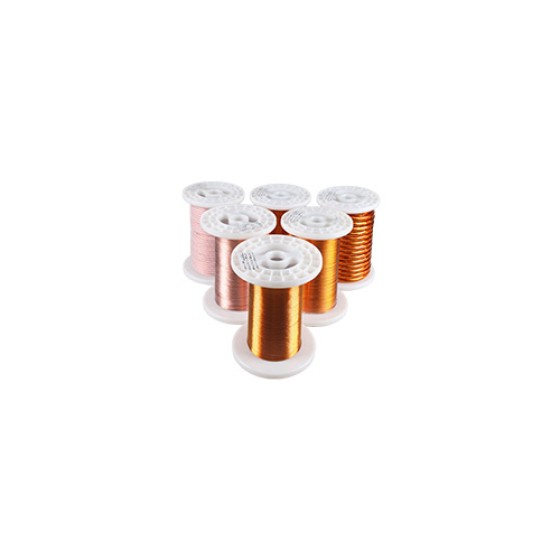
Match the Core With the Winding Design
Ferrite core selection cannot be separated from winding design.
The relationship between the core and winding affects:
- Inductance value
- Leakage inductance
- Copper loss
- Overall efficiency
Factors to consider include:
- Available winding window area
- Wire diameter
- Number of turns
- Insulation requirements
A well-matched core and winding design can significantly improve transformer and inductor performance.
Ferrite Core Selection for Different Applications
Different applications require different ferrite core solutions.
Switching Power Supplies
Common choices:
- EE cores
- EF cores
- PQ cores
Requirements:
- Low loss
- High efficiency
- Compact size
High Frequency Transformers
Common choices:
- MnZn ferrite cores
- EE and EFD structures
Requirements:
- Good magnetic coupling
- Low temperature rise
- Stable operation
EMI Filters
Common choices:
- Toroidal ferrite cores
- NiZn ferrite materials
Requirements:
- High frequency noise suppression
- Low signal loss
Common Mistakes When Selecting Ferrite Cores
Some common mistakes include:
- Choosing a material only based on size
- Ignoring operating frequency
- Using incorrect core shapes
- Not considering temperature effects
- Selecting insufficient power capacity
A ferrite core that looks suitable physically may not provide the required electrical performance.
Choosing the right ferrite core requires balancing material properties, operating frequency, power requirements, core shape, and thermal conditions. A properly selected ferrite core can improve efficiency, reduce losses, and extend the service life of transformers and inductors.
For modern power electronics, ferrite core selection is not only a component choice but also an important part of magnetic component design.