



What Are the Different Types of Electronic Transformers?
Electronic transformers are essential components used in modern power electronics to transfer electrical energy, convert voltage levels, and provide isolation between circuits. They are widely used in power supplies, consumer electronics, industrial equipment, electric vehicles, and renewable energy systems.
Although all transformers work based on electromagnetic induction, different designs are developed to meet specific requirements such as operating frequency, power capacity, size, efficiency, and application environment.
Understanding the different types of electronic transformers helps engineers and buyers select the right solution for their projects.
High Frequency Transformers
High frequency transformers are among the most commonly used electronic transformers today. They typically operate at frequencies from several kilohertz to hundreds of kilohertz and are widely used in switching power supplies.
Compared with traditional low-frequency transformers, high frequency transformers can achieve smaller size and higher efficiency because higher operating frequencies allow more compact magnetic components.
Common applications include:
- Switching power supplies
- Battery chargers
- LED drivers
- Industrial power converters
- EV charging systems
Ferrite cores are usually used in high frequency transformers because they provide low core loss and excellent magnetic performance at elevated frequencies.
Flyback Transformers
Flyback transformers are widely used in low-power switching power supply applications. Unlike traditional transformers, a flyback transformer stores energy in the magnetic field during one switching period and releases it to the output during another period.
They are commonly found in:
- Mobile phone chargers
- Power adapters
- Standby power supplies
- Small consumer electronics
Flyback transformers are popular because of their simple structure, low cost, and ability to provide electrical isolation and voltage conversion.
Forward Transformers
Forward transformers are used in applications requiring higher power output compared with flyback designs.
Unlike flyback transformers, forward transformers transfer energy directly from the input side to the output side while the switching device is operating.
They are commonly used in:
- Industrial power supplies
- Communication equipment
- DC-DC converters
Forward transformer designs usually provide better efficiency for medium-power applications.
Push-Pull Transformers
Push-pull transformers are used in power conversion systems where two switching devices alternately drive the transformer winding.
This design allows efficient use of the transformer core and is suitable for higher power applications.
Typical applications include:
- Battery-powered systems
- DC-DC converters
- Renewable energy equipment
Push-pull transformers require accurate winding design and proper core selection to achieve reliable operation.
Half Bridge and Full Bridge Transformers
Half bridge and full bridge transformer designs are commonly used in high-power electronic systems.
These transformers operate with switching circuits that apply alternating voltage to the primary winding, allowing efficient energy transfer.
They are widely used in:
- Industrial power supplies
- Solar inverters
- Electric vehicle charging systems
- High-power converters
Full bridge designs are typically selected for higher power requirements because they provide better utilization of the transformer core.
Isolation Transformers
Isolation transformers are designed mainly to provide electrical separation between input and output circuits.
Their primary purpose is safety protection rather than voltage conversion.
Applications include:
- Medical equipment
- Industrial control systems
- Testing equipment
- Sensitive electronic devices
Isolation transformers help protect circuits and users by preventing direct electrical connection between different parts of a system.
Power Transformers
Power transformers are designed to handle higher power levels and are used for voltage conversion in various electrical systems.
In electronic applications, compact power transformers are often used in:
- Industrial equipment
- Power supply systems
- Energy conversion devices
Their design focuses on efficiency, thermal management, and long-term reliability.
Toroidal Transformers
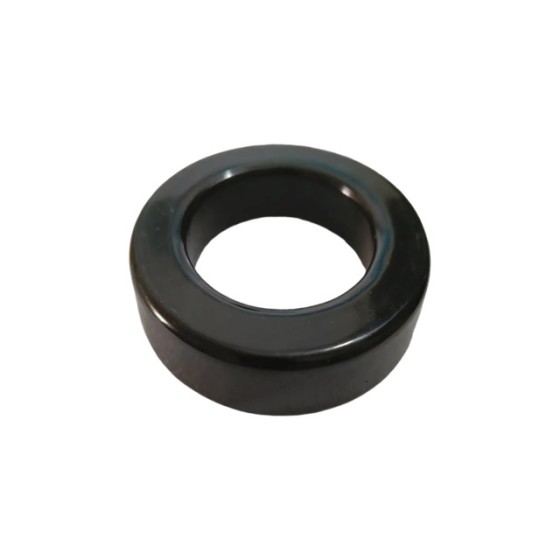
Toroidal transformers use ring-shaped magnetic cores that provide a closed magnetic path.
This structure offers several advantages:
- Low magnetic leakage
- Reduced electromagnetic interference
- High efficiency
- Compact design
They are often used in:
- Audio equipment
- Medical devices
- Industrial electronics
How to Choose the Right Electronic Transformer?
Selecting an electronic transformer depends on several design factors.
Operating Frequency
High frequency transformers are suitable for switching power supplies, while traditional transformers are used for lower-frequency applications.
Power Requirements
The transformer size and structure must match the required output power to avoid overheating and efficiency problems.
Application Environment
Different industries may require specific characteristics, such as:
- High temperature resistance
- Low noise operation
- Safety insulation
- Compact size
Core Material
The magnetic core material affects transformer performance. Ferrite cores are commonly used for high frequency transformers, while other materials may be selected for different operating conditions.
Electronic transformers are available in many different designs, each optimized for specific applications. From compact flyback transformers in consumer electronics to high-power bridge transformers in industrial systems, choosing the right transformer type is essential for achieving efficient and reliable power conversion.
As electronic devices continue to become smaller and more energy-efficient, advanced transformer designs will continue to play an important role in power electronics development.