



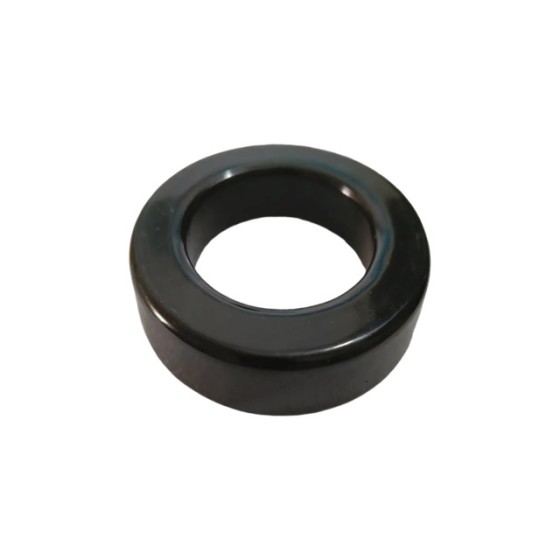
What Is a Ferrite Core and How Does It Work?
In almost every modern electronic device, magnetic components play an important role in power conversion and signal processing. From smartphone chargers and LED drivers to electric vehicle power systems, ferrite cores are commonly found inside transformers, inductors, and EMI filters.
A ferrite core is a magnetic component made from ferrite ceramic materials, mainly consisting of iron oxide combined with other metal oxides such as manganese or zinc. Unlike traditional metal magnetic materials, ferrite has high electrical resistance, which makes it especially suitable for high-frequency applications.
The main purpose of a ferrite core is to provide an efficient path for magnetic flux. When current passes through a coil winding, a magnetic field is generated around the conductor. The ferrite core concentrates this magnetic field and improves the energy transfer between the electrical and magnetic systems.
Why Are Ferrite Cores Widely Used in Electronics?
The rapid development of switching power supplies created a demand for smaller and more efficient magnetic components. Traditional iron cores can suffer from significant losses when operating at higher frequencies, while ferrite materials maintain better performance.
The advantages of ferrite cores mainly come from several characteristics:
Low Power Loss at High Frequency
Ferrite materials have high electrical resistivity, which helps reduce eddy current losses. This makes them suitable for transformers operating at tens of kilohertz or even higher frequencies.
Good Magnetic Permeability
A ferrite core can effectively guide magnetic flux through the core structure. This improves coupling between windings and allows transformers and inductors to achieve better efficiency.
Compact Size
Because ferrite cores perform well at high frequencies, transformer designers can use higher operating frequencies to reduce the size of magnetic components.
This is why ferrite cores are commonly used in compact power adapters, consumer electronics, and industrial power supplies.
Different Ferrite Core Materials
Not all ferrite cores have the same characteristics. Different materials are selected depending on frequency range, power requirements, and application conditions.
MnZn ferrite is one of the most common materials used for power transformers and inductors. It provides high permeability and good saturation characteristics, making it suitable for applications such as switching power supplies and power conversion systems.
NiZn ferrite has higher electrical resistivity and performs better at higher frequencies. It is often used in signal transformers, RF components, and EMI suppression applications.
The selection of ferrite material is an important part of magnetic component design because it directly affects efficiency, temperature rise, and operating reliability.
Ferrite Core Shapes Used in Transformers and Inductors
Ferrite cores are available in many different shapes, each designed for specific applications.
EE cores are widely used in power transformers because they provide a simple structure and convenient winding process. They are commonly found in adapters, chargers, and switching power supplies.
EF and EFD cores are designed for compact applications where space is limited. They are often used in slim power supplies and consumer electronics.
PQ cores are typically selected for higher power density applications because their shape provides efficient winding space and good thermal characteristics.
Toroidal cores provide a closed magnetic path, which helps reduce leakage flux and electromagnetic interference. They are often used in applications where low noise performance is important.
The Role of Ferrite Cores in High Frequency Transformers
High frequency transformers rely heavily on ferrite core performance. The core material, shape, and size all influence important parameters such as:
- Core loss
- Temperature rise
- Leakage inductance
- Energy efficiency
- Power density
For example, a poorly selected ferrite core may cause excessive heat generation or magnetic saturation, reducing transformer reliability.
Engineers usually consider operating frequency, output power, switching waveform, and thermal conditions before selecting a suitable ferrite core.
Applications of Ferrite Cores
Ferrite cores can be found in many areas of modern electronics:
- Switching power supplies
- High frequency transformers
- EV charging systems
- Solar inverters
- Energy storage equipment
- LED drivers
- Industrial power supplies
- EMI filter components
As electronic devices continue moving toward higher efficiency and smaller sizes, ferrite materials remain an essential technology for magnetic component development.
Ferrite cores may appear simple in structure, but their material properties and design parameters have a significant impact on the overall performance of electronic systems. Choosing the right ferrite core is one of the key steps in developing reliable transformers and inductors.