



How to Choose the Right Transformer for Your Application?
Selecting the right transformer is an important step in designing any electronic or power system. A transformer that matches the application requirements can improve efficiency, reliability, and safety, while an unsuitable design may lead to overheating, unstable output, or reduced service life.
Transformers are available in many different types, sizes, and configurations. The best choice depends on factors such as voltage requirements, power capacity, operating frequency, environmental conditions, and the specific needs of the final application.
Determine the Required Voltage Levels
The first step in transformer selection is understanding the required input and output voltages.
A transformer can be designed to increase voltage, reduce voltage, or provide multiple output voltages depending on the circuit requirements.
Important voltage parameters include:
- Input voltage
- Output voltage
- Voltage tolerance
- Isolation requirements
For example, a transformer used in a consumer charger may need to convert a high AC input voltage into a low DC output voltage, while an industrial power system may require completely different voltage characteristics.
Accurate voltage requirements help determine the correct winding ratio and transformer structure.
Calculate the Required Power Rating
Power rating is one of the most important factors when choosing a transformer.
A transformer must be capable of handling the required load without excessive temperature rise or energy loss.
The power rating is usually determined by:
- Output voltage
- Output current
- Continuous operating time
- Peak load conditions
Choosing a transformer with insufficient power capacity may cause overheating and reliability problems. However, selecting a much larger transformer than necessary can increase cost, size, and energy consumption.
The ideal transformer should provide enough power margin while maintaining efficiency.
Consider the Operating Frequency
Operating frequency has a major impact on transformer design.
Low-frequency transformers, such as those used in traditional power systems, require larger magnetic cores and more winding material.
High-frequency transformers used in switching power supplies operate at much higher frequencies, allowing smaller and lighter designs.
The frequency affects:
- Core material selection
- Transformer size
- Magnetic losses
- Winding design
For example, ferrite core transformers are commonly selected for high-frequency applications because they provide good performance with low losses.
Select the Appropriate Transformer Type
Different applications require different transformer structures.
Common transformer types include:
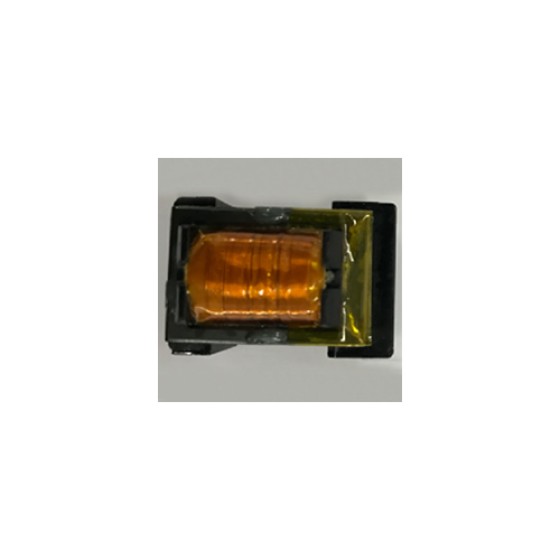
High Frequency Transformers
Used in switching power supplies, adapters, and power converters where small size and high efficiency are important.
Flyback Transformers
Suitable for low-power applications such as chargers and LED drivers.
Forward Transformers
Used for medium-power applications requiring improved efficiency.
Planar Transformers
Designed for compact systems that require high power density.
Custom Transformers
Developed for applications with special voltage, size, insulation, or performance requirements.
Selecting the correct transformer type ensures better compatibility with the overall circuit design.
Evaluate Efficiency Requirements
Efficiency is becoming increasingly important in modern electronic systems.
A transformer with poor efficiency creates more energy loss, generates additional heat, and may reduce the overall performance of the system.
Factors affecting transformer efficiency include:
- Core material
- Copper resistance
- Operating frequency
- Winding structure
- Manufacturing quality
Applications such as AI servers, electric vehicles, and renewable energy systems require transformers with extremely low losses because even small efficiency improvements can create significant energy savings.
Check Size and Installation Limitations
Available space is another important consideration.
Many modern electronic products require smaller and lighter components, especially in portable devices and high-density systems.
Transformer size depends on:
- Power requirements
- Frequency
- Core material
- Thermal design
High-frequency transformers can achieve smaller sizes compared with traditional transformers, making them suitable for compact electronic equipment.
However, reducing size must be balanced with heat dissipation and reliability.
Consider Insulation and Safety Requirements
Transformer insulation is critical for protecting equipment and users.
Different applications have different insulation requirements based on voltage level and safety standards.
Important factors include:
- Insulation material
- Creepage distance
- Clearance distance
- Dielectric strength
- Temperature rating
For applications such as medical equipment, industrial systems, and consumer electronics, proper insulation design is essential for safe operation.
Understand the Operating Environment
The environment where the transformer operates can affect its performance and lifetime.
Important environmental factors include:
- Operating temperature
- Humidity
- Mechanical vibration
- Dust exposure
- Cooling conditions
A transformer used in an industrial environment may require a more robust design compared with one used inside a consumer electronic product.
Choose Between Standard and Custom Transformers
Standard transformers are suitable for many common applications and usually provide a cost-effective solution.
However, custom transformers may be necessary when specific requirements cannot be met by standard products.
Custom designs are often used when there are requirements for:
- Special voltage ratios
- Unique dimensions
- Higher efficiency
- Specific insulation structures
- Special operating conditions
Many advanced applications rely on custom transformer designs to achieve the best performance.
Work with the Right Transformer Manufacturer
The transformer manufacturer also plays an important role in achieving a reliable solution.
A professional manufacturer should have experience in:
- Magnetic design
- Material selection
- Winding technology
- Quality testing
- Custom engineering
Good manufacturing processes ensure consistent performance and reduce the risk of failures during operation.
Choosing the right transformer requires a complete understanding of the electrical requirements, operating environment, and performance goals of the application. Voltage, power rating, frequency, efficiency, insulation, and size all influence the final design.
Whether used in consumer electronics, industrial equipment, renewable energy systems, or advanced computing platforms, the correct transformer selection helps improve system efficiency, reliability, and long-term performance.