





Why Are Transformers Important for AI Server Power Supplies?
The rapid development of artificial intelligence has created a growing demand for powerful computing infrastructure. AI servers used for machine learning, large language models, and data processing require significantly more electrical power than traditional servers.
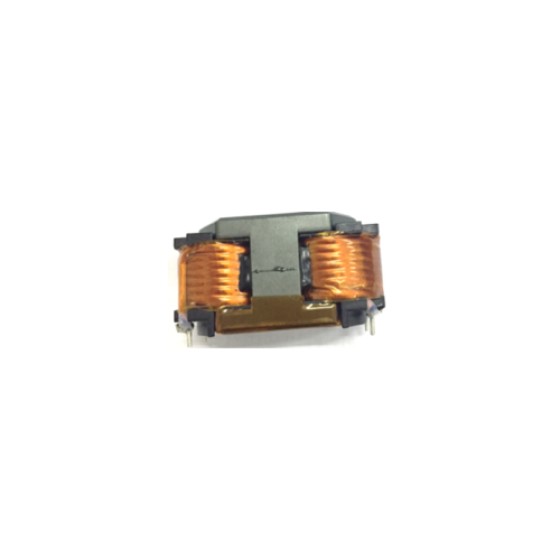
Behind every high-performance AI system is a complex power supply architecture designed to deliver stable and efficient energy to processors, memory modules, and other critical components. Transformers play a key role in this process by converting voltages, providing electrical isolation, and helping power systems achieve higher efficiency in increasingly demanding environments.
The Increasing Power Demand of AI Servers
AI workloads require powerful processors such as GPUs and specialized accelerators. These components consume large amounts of electricity and generate substantial heat during operation.
Modern AI servers may require much higher power levels than conventional computing systems, which creates new challenges for power supply design.
Power systems must provide:
- Stable voltage output
- High conversion efficiency
- Low energy loss
- Reliable operation under continuous load
- Compact designs for high-density data centers
Transformers are essential components that help meet these requirements.
Voltage Conversion for High-Performance Computing
One of the primary functions of transformers in AI server power supplies is voltage conversion.
Data centers typically receive electrical power at higher AC voltage levels, while server components require much lower DC voltages for operation.
The power conversion process usually involves multiple stages:
- AC input power enters the server power system.
- Transformers convert voltage levels and provide isolation.
- Power converters regulate the voltage for processors and other components.
- Stable DC power is delivered to computing hardware.
Without efficient transformer technology, it would be difficult to provide the precise power delivery required by advanced AI processors.
Supporting High Power Density Designs
AI servers are becoming more powerful while data center space remains limited. This creates a need for power supplies that can deliver more energy in smaller physical sizes.
High-frequency transformers help achieve higher power density because they can operate at much higher frequencies than traditional transformers.
Higher operating frequencies allow:
- Smaller magnetic cores
- Reduced transformer size
- Lower system weight
- More efficient power conversion
This is one reason why modern AI server power supplies often use advanced high-frequency transformer designs.
Improving Energy Efficiency
Energy efficiency is a major concern in AI data centers because electricity consumption directly affects operating costs and environmental impact.
Transformers influence overall system efficiency by reducing energy losses during power conversion.
Important factors include:
- Low core loss materials
- Optimized winding structures
- Reduced copper losses
- Improved thermal management
Even a small improvement in transformer efficiency can create significant energy savings when thousands of servers operate continuously.
Providing Electrical Isolation
AI server systems contain sensitive electronic components that require stable and safe power delivery.
Transformers provide electrical isolation between different parts of the power system. This helps protect equipment from electrical faults and reduces the risk of damage caused by voltage fluctuations.
Isolation is especially important in large data centers where power systems operate continuously and downtime can be extremely costly.
The Role of Magnetic Materials
The performance of AI server transformers depends heavily on the magnetic materials used inside them.
Ferrite cores are commonly used in high-frequency transformer designs because they offer:
- Low power loss
- Good high-frequency performance
- High electrical resistance
- Stable magnetic characteristics
Advanced ferrite materials allow transformers to operate efficiently at higher frequencies while maintaining reliability.
Transformers in AI Data Center Power Architectures
Modern AI data centers often use advanced power architectures that include:
- AC-DC power supplies
- DC-DC converters
- High-frequency transformers
- Magnetic inductors
- Power distribution systems
Transformers work together with semiconductor components such as MOSFETs and power modules to create efficient energy conversion systems.
As AI processors continue to increase in performance, power supply systems must continue improving to support higher current levels and greater power requirements.
Challenges in AI Server Transformer Design
Designing transformers for AI server applications presents several challenges.
Thermal Management
Higher power levels generate more heat, requiring better cooling strategies and materials that can maintain performance at elevated temperatures.
Miniaturization
Data centers require compact power solutions to maximize computing density. Transformer designers must balance size reduction with efficiency and reliability.
Reliability
AI servers often operate continuously for long periods. Transformers must withstand constant electrical and thermal stress without performance degradation.
Electromagnetic Compatibility
High-frequency switching can create electromagnetic interference. Proper transformer design helps reduce noise and maintain system stability.
Future Development of AI Power Transformers
As AI computing continues to expand, power supply technology will continue evolving.
Future transformer developments may focus on:
- Higher power density
- Advanced magnetic materials
- Improved cooling methods
- More efficient high-frequency designs
- Integrated magnetic components
Technologies such as gallium nitride (GaN) and silicon carbide (SiC) power devices are also creating new opportunities for higher-frequency and more efficient transformer designs.
Transformers may not be the most visible components in AI servers, but they are essential for delivering the stable and efficient power required by modern computing systems. From voltage conversion and electrical isolation to energy efficiency and thermal management, transformer technology directly affects the performance and reliability of AI infrastructure.
As artificial intelligence applications continue to grow, advanced transformer designs will remain a critical part of the power systems supporting next-generation data centers.