




What Is the Relationship Between Transformer Size and Power?
When selecting or designing a transformer, one common question is whether a larger transformer always means higher power. In most cases, transformer size and power capacity are closely related, but the relationship is influenced by many other factors, including operating frequency, core material, cooling method, and design efficiency.
A transformer must have enough magnetic and thermal capability to transfer the required amount of energy without excessive losses. This is why higher-power transformers are usually larger, while modern high-frequency transformers can achieve high power levels in much smaller packages.
Why Does a Larger Transformer Usually Handle More Power?
A transformer transfers energy through its magnetic core and windings. As power requirements increase, the transformer needs to handle higher current and store more magnetic energy.
A larger transformer typically provides:
- A bigger magnetic core
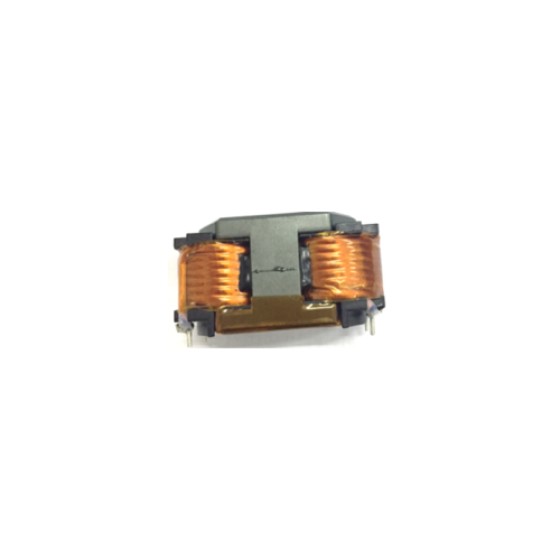
- More space for copper windings
- Better heat dissipation
- Higher current-carrying capability
The larger core can support greater magnetic flux, while thicker windings can carry more current with lower resistance.
For example, a small transformer inside a phone charger may only handle several watts, while an industrial transformer may need to transfer thousands of watts and therefore requires a much larger structure.
The Role of the Magnetic Core
The magnetic core is one of the main factors determining transformer size.
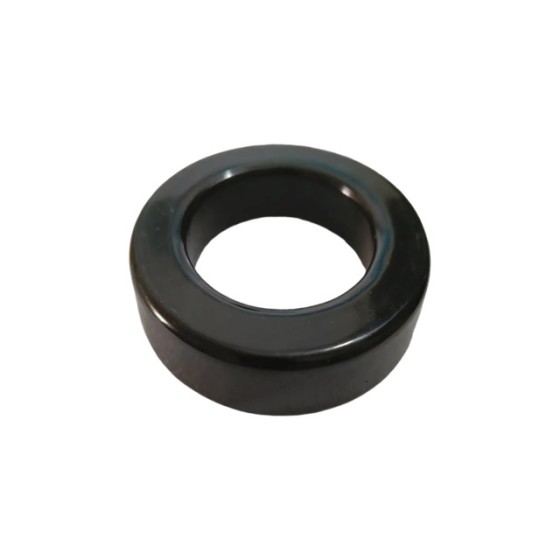
The core provides a path for magnetic flux between the primary and secondary windings. If the core is too small for the required power level, it may reach magnetic saturation, causing increased losses and overheating.
A larger core allows:
- Higher magnetic flux capacity
- More efficient energy transfer
- Reduced core stress
- Higher power handling ability
However, increasing core size also increases material cost, weight, and physical dimensions.
Frequency Has a Major Influence on Transformer Size
One of the most important factors affecting transformer size is operating frequency.
Traditional power transformers operating at 50 Hz or 60 Hz require large iron cores because the magnetic field changes relatively slowly. To transfer large amounts of power efficiently at these frequencies, more magnetic material is needed.
High-frequency transformers operate at much higher frequencies, often from tens of kilohertz to hundreds of kilohertz. Because the magnetic field changes much faster, the transformer can transfer the same amount of power using a much smaller core.
This is why:
- Traditional power transformers are large and heavy
- Switching power supply transformers are compact and lightweight
Modern electronics rely heavily on high-frequency transformer technology to achieve smaller product designs.
Power Density and Transformer Design
Power density describes how much power a transformer can handle compared with its physical size.
Improving power density has become a major goal in modern transformer design, especially for applications such as:
- Electric vehicle chargers
- AI server power supplies
- Renewable energy systems
- Portable electronics
Higher power density requires careful optimization of:
- Core materials
- Winding arrangement
- Cooling methods
- Insulation structure
- Operating frequency
A well-designed transformer can deliver more power without significantly increasing its size.
The Importance of Heat Management
Power transfer always creates some energy loss, which appears as heat.
The main sources of transformer heat include:
- Copper losses from winding resistance
- Core losses from magnetic materials
- Switching losses in high-frequency applications
A larger transformer usually has more surface area, allowing heat to escape more easily.
For high-power applications, designers may use:
- Larger cores
- Improved ventilation
- Cooling systems
- Better thermal materials
Without proper thermal management, even a correctly sized transformer may experience reduced efficiency and shorter service life.
Why Material Selection Matters
Transformer size is not determined by physical dimensions alone. The materials inside the transformer also have a significant impact.
For example, ferrite cores are commonly used in high-frequency transformers because they provide low losses at high switching frequencies.
Different magnetic materials affect:
- Maximum operating frequency
- Core loss
- Temperature performance
- Power capability
Choosing the right material allows engineers to reduce transformer size while maintaining reliable performance.
Can a Small Transformer Have High Power?
Yes, but only under specific conditions.
A small transformer can achieve high power density when it uses:
- High-frequency operation
- Advanced magnetic materials
- Efficient winding designs
- Effective cooling methods
This is common in modern switching power supplies, where compact transformers can deliver significant power compared with older low-frequency designs.
However, there are physical limits. A transformer still needs enough magnetic and thermal capacity to safely handle the required energy.
Size Is Not the Only Indicator of Performance
Although larger transformers often support higher power levels, size alone does not determine performance.
Two transformers with similar dimensions can have very different power ratings depending on:
- Core material quality
- Operating frequency
- Winding efficiency
- Cooling design
- Manufacturing precision
A carefully optimized transformer may outperform a larger but poorly designed one.
Choosing the Right Transformer Size
When selecting a transformer, engineers consider more than just output power.
Important factors include:
- Required voltage conversion
- Operating frequency
- Continuous or peak load
- Environmental temperature
- Available installation space
- Efficiency requirements
The goal is to find a balance between power capability, size, cost, and reliability.
Final Thoughts
The relationship between transformer size and power is closely connected, but it is not a simple one-to-one relationship. Higher power usually requires larger cores, stronger windings, and better heat management, but advanced technologies allow modern transformers to achieve much higher power density.
Through improvements in magnetic materials, high-frequency operation, and optimized designs, today's transformers can deliver more power in smaller and more efficient packages than ever before.